
At Centurion Properties, we have always believed that true success lies not just in the buildings we construct but in the values we embed into every project. This year, we are deeply humbled to share that we have been named among the Top 100 Real Estate Developers in the GCC., securing a significant position
For us, this recognition is not about numbers or rankings, it is a reflection of the hard work, trust, and shared vision that our team, partners and communities have nurtured together.
Over the past year, our journey has been guided by the principle that progress is more than square footage. We have rolled out over 15 projects across residential and commercial sectors, each designed with innovation, sustainability and smart planning at its core. From digitizing our processes to reducing inefficiencies and our carbon footprint, to recording our highest conversion rate at Burj Capital, we’ve learned that growth can indeed be both green and profitable.
Today, we are proud to have five projects worth $328 million (AED 1.22 billion) under construction, including Capital One Motor City, Flora Isle, and Sola Residences, alongside upcoming launches like Capital One JVC and Burj Capital. Looking ahead in this year, we have also secured contracts worth $418 million (AED 1.53 billion), a testament to the trust placed in us and the strength of our pipeline.
Our continuous growth has given us the opportunity to build responsibly. From using recycled materials and solar-powered systems to embedding LEED-certified solutions, we remain committed to reducing our environmental impact. Our initiatives extend to labour welfare, residential recycling, and waste reduction through precise engineering, because sustainability is as much about people as it is about the planet.
This recognition in the GCC Top 100 is a milestone, but for us, it is also a reminder of the responsibility we carry. As we continue to grow, our focus remains steady: to deliver projects that balance innovation, sustainability, and community well-being, while building a future-ready real estate portfolio for the UAE and beyond.
We thank our team, partner and clients who made this possible. This achievement belongs to all of you as much as it does to Centurion Properties.
As climate pressures intensify across the globe, the Future of Real Estate Market is facing a crucial pivot point. With rising temperatures, limited freshwater resources, and increasingly stringent sustainability mandates, developers are now prioritising climate resilience as a core pillar of project design and delivery.
This blog explores the practical strategies employed by forward-thinking UAE developers like Centurion Properties and what construction companies, sub-developers, and contractor agencies must do to support this evolving paradigm.
1. Designing for Heat Resilience
High-Performance Building Envelopes
To combat extreme heat and solar gain, developers are specifying:
- High-reflectance roofing materials (SRI-compliant)
- Double or triple-glazed low-emissivity (Low-E) windows
- Thermal insulation systems in roofs and walls with low thermal transmittance (U-values)
Construction Implication:
- Façade and MEP contractors must coordinate to avoid thermal bridging.
- Air tightness testing (blower door tests) should be included in the QA process.
Passive Cooling Techniques
- Shading devices, vertical fins, and deep-set windows to reduce solar exposure.
- Orientation-based massing to minimize east-west heat gain.
2. Water Management and Conservation
Smart Irrigation and Greywater Recycling
With the UAE’s high water stress levels, sustainable projects now feature:
- Drip irrigation with soil moisture sensors
- Greywater treatment plants for reuse in flushing and landscaping
- Condensate recovery systems from HVAC units
Construction Scope Additions:
- Installation of dual plumbing systems
- Waterproofing and chemical treatment solutions in greywater tanks
- Coordination with local authorities for treated water discharge permits
Low-Flow Plumbing Fixtures
Fixtures must now comply with the Water Efficiency Labelling Scheme (WELS).
Contractor Tip:
Procurement teams should prioritise sanitaryware with WELS 4-star ratings or higher and ensure flow restrictors are pre-installed during site fit-out.
3. Energy Optimization for Extreme Climates
On-Site Renewable Integration
Developers like Centurion are incorporating
- Photovoltaic (PV) panels on rooftops and parking structures
- Solar thermal systems for domestic hot water (DHW) pre-heating
Construction Best Practice:
- Provide structural coordination for PV mounting loads.
- Integrate PV-ready electrical infrastructure during the rough-in phase.
Smart Building Management Systems (BMS)
- AI-powered BMS automatically adjusts HVAC, lighting, and blinds based on occupancy and weather data.
- Energy dashboards allow building operators to monitor carbon performance in real time.
Technical Note:
MEP contractors must ensure smart-ready equipment (VRF units, VAV boxes, sensors) are integrated seamlessly into the BMS network.
4. Material Innovation for Climate Durability
Low-Carbon and High-Durability Materials
To withstand temperature extremes and reduce embodied carbon, projects are now using:
- Low-carbon concrete mixes with GGBS and fly ash
- UV-resistant exterior coatings and membranes
- Recycled composites for decking, façades, and cladding
For Contractors:
- Validate supplier certifications (EPD, ISO 14025) before approval.
- Ensure thermal expansion tolerances are built into detailing, especially in exterior claddings.
5. Green Infrastructure and Urban Cooling
Nature-Based Cooling
Developers are using landscape-based climate control, including:
- Urban tree canopies
- Green roofs and living walls
- Bioswales and retention ponds
Construction Considerations:
- Civil and landscape teams must collaborate on waterproofing, drainage gradients, and substrate design.
- Irrigation systems should integrate weather-based controls.
Example:
In Centurion’s upcoming mixed-use projects, microclimate zones are created using native vegetation, increasing walkability and reducing heat island effects.
6. Future of Real Estate Market Through Digital Modelling and Monitoring
Climate Scenario Modelling
Using tools like Urban Weather Generator (UWG) and EnergyPlus, developers can simulate how buildings will perform under future climate stressors.
For Contractors:
Engage with consultants during design review to understand long-term thermal loads and ensure system sizing is resilient under 2050+ conditions.
Post-Occupancy Performance Tracking
- Developers now demand sensor-based monitoring of water, energy, and indoor air quality.
- Performance data is tied back to Digital Twin platforms for lifecycle asset management.
Construction Requirement:
Include sensor placement and calibration in the commissioning checklist, especially for HVAC and water systems.
7. Sustainability Certifications Driving Resilience Standards
Even without legal mandates, certifications such as:
- LEED,
- Al Sa’fat, and
- Estidama Pearl Ratings
Now shape how projects are designed and built.
Construction Responsibilities:
- Coordinate documentation with sustainability consultants.
- Follow compliant installation procedures (e.g., MERV filters for IAQ, daylight controls).
- Ensure submittals support credit achievement under targeted certification levels.
Building Resilience Is Building Value
In 2025, Future of Real Estate Market and climate-resilient real estate is not just about mitigating risks; it’s about delivering long-term value to investors, operators, and end-users. Developers like Centurion are leading this transformation by embedding resilience, sustainability, and climate intelligence into every phase of development.
For construction companies and sub-developers, this requires
- Evolving technical competencies
- Aligning with green and climate-ready specifications
- Delivering projects that respond to both today’s conditions and tomorrow’s challenges
Modern real estate development is undergoing a critical shift from focusing solely on structural integrity and aesthetics to prioritising human wellness. In 2025, wellness is not a trend; it’s a standard. Developers like Centurion Properties are championing wellness-centric design, where mental, physical, and emotional well-being are integrated into the built environment and smart building Dubai
For construction firms and contractor agencies, this presents a new set of technical expectations and collaboration opportunities. This blog explores how wellness is shaping design decisions and what construction professionals must do to deliver healthy, occupant-centric developments.
1. Biophilic Design Architecture: Reconnecting Buildings with Nature
What It Is:
The biophilic design concept incorporates natural elements like light, vegetation, water, and organic materials into the built environment to reduce stress and enhance well-being in smart building Dubai
Key Features:
- Vertical green walls, rooftop gardens, and indoor planting zones
- Natural material finishes (stone, timber, terracotta)
- Visual connections to outdoor greenery from every major space
Construction Considerations:
- Landscape and structural coordination for green roofs and vertical gardens
- Waterproofing, root barrier systems, and drainage detailing
- Maintenance planning integrated into construction handover
2. Air Quality Optimization: Breathing Health into Interiors
The Goal:
Ensure optimal indoor air quality (IAQ) through filtration, ventilation, and monitoring.
Key Technologies:
- MERV 13 or HEPA-grade filtration systems in HVAC
- Demand-controlled ventilation (DCV) using CO₂ sensors
- Low-VOC paints, adhesives, and finishes
Contractor Scope:
- MEP teams must size fresh air systems to meet ASHRAE 62.1 standards.
- Coordinate BMS integration for air quality monitoring and reporting.
- Pre-handover IAQ testing must be planned and documented.
3. Acoustic Comfort: Reducing Noise for Mental Health
Excessive noise impacts sleep quality, cognitive function, and stress levels. Wellness-focused buildings prioritise acoustic insulation through:
- Double-glazed or laminated windows
- Acoustic baffles and panels in ceilings/walls
- Soundproofing between units using mass-loaded vinyl or acoustic foam
Installation Guidance:
- Acoustic detailing must be coordinated early especially in multi-use buildings.
- Test post-installation performance using decibel measurement tools.
4. Thermal and Lighting Comfort: Smart Building Components
Wellness-focused design ensures indoor spaces support thermal comfort and circadian rhythm alignment.
Strategies:
- Operable windows for natural ventilation
- Adaptive shading systems
- Circadian lighting systems (human-centric lighting) with tunable white LEDs
MEP Scope:
- Integrate lighting systems with occupancy and daylight sensors
- Provide occupant-controlled thermostats with zonal HVAC zoning
Construction Detail:
Ensure electrical layouts accommodate multi-sensor inputs (occupancy, lux levels, temperature) and maintain low-voltage compatibility.
5. Community and Social Wellness Spaces
Buildings that foster social connection improve mental health and overall happiness. Developers are now integrating
- Co-working zones and lounges
- Fitness and meditation areas
- Outdoor amphitheaters, parks, and communal kitchens
Civil and Architectural Coordination:
- Surface finishes, access control, AV integration, and furniture placement require joint detailing.
- Lifestyle infrastructure must be inclusive and meet universal design principles.
Centurion Properties’ Example:
Recent projects feature wellness promenades, group fitness terraces, and outdoor art installations, all built into the master plan not as an afterthought.
6. Digital Wellness: Supporting the Modern Lifestyle
Technology integration also plays a role in well-being:
- Smart lighting and HVAC control via apps
- EMF shielding in high-tech zones
- Touchless entry and voice-activated elevators
Wellness-Centric Construction Is the Future
Well-being is no longer the responsibility of end-users or property managers; it’s embedded in the design, materials, systems, and construction methods. Developers like Centurion Properties are creating spaces that actively promote human health, and construction teams must align to this vision.
Delivering wellness-centric buildings requires
- Early-stage involvement of contractors in design development
- Familiarity with wellness rating systems and human-centered performance criteria
- Proactive communication across MEP, architecture, and interiors
In today’s hyper-connected world, real estate development is no longer just about land acquisition, project execution, and sales. It’s about creating a compelling narrative around each property and using digital tools to tell that story at scale. Modern buyers, especially in regions like the UAE, aren’t just purchasing a home; they’re investing in a lifestyle, a vision, and a brand.
For developers, this means shifting from a project-driven mindset to a brand-driven strategy and for construction partners, it means aligning deliverables to support that narrative. This blog outlines the key elements of real estate branding in the digital age and how forward-thinking firms like Centurion Properties are adapting.
1. Real Estate Branding Begins Before the First Brick Is Laid
Real estate brands are now built from the concept stage not just at handover. Buyers want to connect with the developer’s vision, values, and long-term commitment.
Developer Strategy:
- Define a clear brand positioning: Is your development about sustainability? Luxury? Smart living? Community?
- Craft unique value propositions (UVPs) for each asset class.
- Use mood boards, brand manuals, and storytelling scripts to guide marketing teams and your construction partners.
Construction Relevance:
- Design and build elements (materials, finishes, public realm quality) must visually and experientially reinforce the brand.
- Sub-developers should understand the brand language to maintain consistency across zones, towers, or phases.
2. Digital-First Impressions: The New Sales Showroom
Modern buyers start their property journey online, not in sales offices. Your brand’s first impression is shaped by digital assets renderings, websites, videos, and ads.
Key Real Estate Branding Tools:
- Interactive websites with intuitive UX and branding continuity
- High-quality CGI and animation
- Social media storytelling through micro-content and paid ads
For Contractors:
- Provide high-resolution progress shots, site drone footage, and clean execution to support marketing visuals.
- Enable early mock-up units and sample flats for digital walkthrough production.
3. Virtual Reality (VR) and 3D Tours: Immersive Storytelling
VR tours are no longer optional they’re expected by international buyers and investors.
What It Delivers:
- Remote access to experience layouts, light, and spatial flow
- Real-time walkthroughs via web or VR headsets
- A powerful emotional connection to the property before it’s completed
Construction Input Required:
- Collaborate with 3D teams to map actual vs. planned material specs.
- Ensure mock-up units and sample homes are delivered exactly as per VR model for consistency and trust.
4. Influencer and Content Collaboration: The Social Proof Buyers Crave
Real estate influencers, design bloggers, and local content creators are now part of the marketing funnel.
Developer Strategies:
- Collaborate with niche influencers (e.g., architecture, interior design, UAE lifestyle).
- Host “hard hat tours” and behind-the-scenes construction content.
Sub-developer Role:
- Maintain high-visual-quality sites to support clean, brand-ready footage.
- Facilitate site access and safety for content creators and media teams.
5. Storytelling Through Architecture and Design
Every material choice, spatial layout, and visual axis should contribute to the story your development is telling whether it’s heritage, innovation, or serenity.
Key Real Estate Branding Design Principles:
- Cohesive identity across towers and zones
- Iconic elements (e.g., a signature façade, public plaza, or lobby concept)
- Use of textures, lighting, and landscaping to evoke emotion
Contractor Consideration:
- Ensure high fidelity to architectural design intent
- Avoid value-engineering choices that dilute brand perception (e.g., replacing premium façade panels with generic alternatives)
6. Data-Driven Real Estate Branding Decisions
Modern real estate marketing uses data analytics to:
- Segment audiences
- Track digital engagement
- Optimize campaigns based on CTRs, conversion, and ROI
Implication for Developers:
Use performance data to:
- Refine Real Estate Branding language
- Identify which features (smart tech, green spaces, community zones) resonate most
Construction Relevance:
- Be prepared to scale up or enhance features that are proving to be high-converting selling points
- Adjust phase-wise implementation based on real-time buyer feedback
7. After-Sales Real Estate Branding: Retaining the Relationship
Branding doesn’t end at handover. A developer’s reputation is built on the post-sales experience and the physical product plays a major role in that.
Tactics:
- Digital home manuals and smart user guides
- Branded community apps for service requests, event updates, and feedback
- Events, webinars, and lifestyle workshops for residents
Construction Input:
- Deliver snag-free finishes, responsive warranty support, and seamless handovers to preserve the developer’s brand image.
- Ensure building performance data supports claims made during the sales cycle (e.g., energy savings, sound insulation).
Build the Brand While You Build the Project
In 2025, a real estate brand is not just what you say it is; it’s how the property feels, how it functions, and how it’s experienced digitally.
Developers like Centurion Properties are setting the bar by integrating Real Estate Branding and marketing into every stage of the project lifecycle, and construction teams are critical players in making that brand real.
What is ROI in Real Estate?
The real estate market in Dubai has always been popular with investors from around the world, and 2025 will be no different. With a strong economy, high rental yields, policies that are good for investors, and rising demand from other countries, Dubai continues to offer one of the best returns on investment (ROI) in the world for real estate. There are many high-yield investment opportunities in the city, in both established and new areas. These include high-end apartments, townhouses, and commercial units.

What Makes Dubai’s ROI Stand Out?
Dubai’s real estate market is set up in a way that makes it appealing to both long-term and short-term investors. The city offers a good mix of capital appreciation and rental returns thanks to its low property tax, regulated escrow systems, and growing number of expatriates.
- High rental yields: Average ROI ranges between 6% to 10% annually, depending on the property type and location, significantly higher than mature markets like London (2–4%) or New York (3–5%).
- Tax-free environment: No income tax or capital gains tax increases the real income from properties.
- Dynamic infrastructure growth: Continued investment in infrastructure, such as Dubai Metro expansions and new entertainment hubs, pushes property values upward.
- Investor confidence: The introduction of fractional ownership, Golden Visa programs, and 100% foreign ownership in freehold areas continues to boost investor sentiment.
Average ROI on Real Estate Investment by Property Type
The type of property you invest in can significantly impact your return. From studio apartments in prime areas to townhouses in suburban communities, each asset class offers its own ROI profile in 2025.
1. Apartments (Studios to 3-Bed Units)
Apartments remain the most traded real estate asset in Dubai due to high tenant demand and accessibility.
- Studio apartments in Jumeirah Village Circle (JVC) or Dubai Silicon Oasis offer ROI between 8–10%
- 1-2 bedroom units in Downtown or Business Bay return 6–8%
- Luxury apartments in Palm Jumeirah or Dubai Marina generate 5–7% ROI, balanced between rental income and capital appreciation
Top Performing Areas for Apartments:
- JVC (8–10%)
- Dubai Sports City (7–9%)
- Arjan (7–8%)
- Business Bay (6–7%)
2. Townhouses and Villas
While villas typically deliver lower rental yields compared to apartments, they provide stronger capital appreciation, especially in freehold suburban zones.
- Townhouses in Dubailand or Mudon average 6–7% ROI
- Villas in Arabian Ranches or The Valley yield 5–6% ROI, but appreciate up to 15% annually
- Luxury waterfront villas in Palm Jumeirah may have ROI of 4–5%, but benefit from ultra-high net worth demand and future resale value
3. Commercial Properties
Office spaces, retail shops, and warehouses are seeing renewed demand post-COVID, especially in free zones.
- Shops in JLT or Al Quoz: ROI 7–9%
- Warehousing in Dubai Industrial Park or DIP: ROI 8–10%
- Office units in Business Bay: ROI 6–7%, with steady appreciation
Freehold vs. Leasehold: Which Delivers Better ROI Real Estate?
Dubai offers freehold areas in Dubai and leasehold property options. Each comes with its own investment profile.
Freehold Properties in Dubai
Freehold areas allow full property ownership for life and the right to resell, lease, or pass on to heirs. These areas tend to attract foreign investors due to their autonomy and long-term value.
Key Benefits:
- Full ownership rights
- Strong resale market
- Eligible for 10-year Golden Visa (investment over AED 2 million)
Top Freehold Zones (2025 ROI):
- JVC: 8–10%
- Dubai Marina: 6–8%
- Meydan: 6–7%
- Dubai Hills Estate: 5–7%
Leasehold Properties in Dubai
Leasehold properties are typically offered on a 30 to 99-year lease. They are more popular among residents rather than investors due to restrictions on sub-leasing and reselling.
Leasehold Drawbacks:
- Limited control over resale
- Lower capital appreciation
- Less investor demand
ROI Estimate (2025):
- Average ROI: 4–6%, with slower long-term growth
Verdict: For international and ROI-focused investors, freehold properties are the preferred option due to long-term flexibility, potential for resale, and inclusion in Golden Visa programs.
Why ROI in Dubai Will Remain Strong in 2025 and Beyond
Dubai’s high ROI potential is driven by strong macroeconomic fundamentals, regulatory reforms, and robust demand factors, making it a sustainable growth story rather than a short-term trend. With UAE’s GDP projected to grow 4.2% in 2025, the transformation of Expo City into a global business hub, and the Vision 2040 plan boosting housing demand through population growth, the foundations are solid. Investor confidence is further strengthened by reforms such as fractional ownership, the Dubai REST App, Oqood certificates, and expanded foreign ownership in 20+ freehold zones. Demand continues to rise due to increased investment from Russian, Indian, European, and Chinese buyers, lucrative short-term rental opportunities through platforms like Airbnb, and a surge in wealthy expat migration supported by new visa policies.
Final Thoughts
In 2025, Dubai real estate will still have the highest return on investment (ROI) around the world thanks to its high rental rates, strategic freehold developments, and new investment zones. The emirate’s real estate market has unmatched opportunities for both individuals and developers looking for high-yield projects or to diversify their portfolios.
Exploring Joint Venture Agreement models and co-marketing opportunities
Dubai’s Real Estate Market has always done well with new ideas, the ability to grow, and smart planning. co-development & property development strategy will shape the future of real estate development in the UAE. Co-development means working together with landowners, developers, investors, or even the government to bring ideas to market. This is usually done through joint ventures (JVs). As time goes on, this method is quickly becoming the chosen way to make big changes, lower risks, and enter new markets.
In 2025, Dubai’s real estate growth is fueled by strategic partnerships that combine capital, resources, and brand strength. Backed by DLD’s clear compliance rules, the city is emerging as a global hub for real estate alliances.
Why Co-Development is Gaining Ground in Dubai
Things are changing in real estate. Today, developers have to deal with high costs to buy land, stricter rules, and changing buyer standards. Co-development is one way to deal with these problems because it spreads out the risk and the need for money while making the project as efficient as possible.
Benefits of Co-Development in 2025:
- Shared capital, lower risk exposure
- Faster go-to-market timelines
- Better project scale and design via joint expertise
- Access to established developer networks, licenses, and contractors
- Enhanced branding and co-marketing firepower
Understanding Joint Venture Real Estate Models in Dubai
Real Estate Joint venture agreement are used to set up co-development projects. In Dubai, JV models are supported and controlled by clear legal frameworks that spell out who owns what, how profits are shared, who is responsible, and how to leave the partnership. Working together to buy a house is a great idea for many reasons.
Common JV Models in Dubai:
1. Equity-Based Joint Venture
Two or more parties pool financial and/or in-kind resources in exchange for equity in the new venture. This is ideal when a landowner partners with a capital-rich or construction-strong developer.
Example:
- Landowner brings a plot in Meydan
- Developer brings funding and execution capability
- Ownership: 50:50 or proportionate to valuation
- Profit Sharing: Based on shareholding
2. Development Management Agreement (DMA)
The landowner retains full ownership but contracts a developer to manage design, construction, and sales in return for a fee or profit share.
Best for: Landowners who prefer to keep equity but lack development expertise.
3. Revenue-Sharing Joint Venture
Rather than forming a new entity, the parties share revenue (not equity) from the project. This model is increasingly popular in off-plan projects where developers and brokers partner on exclusive sales rights.
Example:
- Developer agrees to 60:40 revenue split with marketing firm
- Ideal for high-volume sales campaigns in new zones (e.g., Dubai South, Arjan)
Licensing Requirements for Co-Development Projects
Anyone or any business in Dubai that works on real estate development, whether they do it alone or with others, needs to have a legal licence from the DLD and the Dubai Economic Department (DED). Licencing makes sure that people are responsible and that the law can be followed in case of disagreements or delays.
Mandatory Licences & Approvals:
- Developer License from DLD: Mandatory for all co-developers
- RERA Registration: Real Estate Regulatory Agency approval for both developer and project
- DED Trade License: Activities must include real estate development, brokerage, or marketing
- Oqood Registration: Project must be registered before selling any off-plan units
- Escrow Account Approval: Separate escrow for each co-developed project
Developer Categories under DLD:
- Master Developers: Full authority to sub-develop and approve others (e.g., Emaar, Nakheel)
- Sub-developers: Operate under master community rules (e.g., in Dubai South, MBR City)
DLD Compliance and Escrow Rules in Co-Developments
Transparency and buyer protection are core pillars of Dubai’s real estate governance. The DLD has instituted strict guidelines for co-development to avoid mismanagement, delays, or buyer disputes.
Key DLD Compliance Requirements:
- Each JV must register the project under a unified entity or consortium with clear roles
- Escrow Account must be set up in the joint name with bank signatories from both partners
- Project Timeline and Milestones must be submitted and updated to RERA
- Contractor Payments: Only released upon meeting defined construction stages, certified by DLD-approved consultants
Co-Marketing: A Crucial Pillar of JV Success
The fuel that makes co-development work is co-marketing. It is very important to make sure that marketing goals, branding rules, and lead generation are all in line with each other when there are a lot of people involved. In Dubai’s off-plan market, which is very competitive, co-marketing helps projects stand out and get ahead.
Co-Marketing Tactics for JV Projects:
1. Joint Campaigns Across Portals and Social Media
- Dual branding across platforms like Bayut, Property Finder, and Google Ads
- Cross-promotional webinars and live sessions
2. Broker Onboarding Events
- Conduct co-branded launches with exclusive broker invites
- Provide unified sales kits and project brochures
3. Incentivized Sales Programs
- Bonus schemes for brokers bringing large volume under co-branded programs
- Up to 5–7% commissions in high-velocity JV projects
4. Real-Time Lead Sharing & CRM
- Use shared CRM (HubSpot, Salesforce, or Proptech solutions)
- Track co-leads, assign follow-ups, and assess ROI per campaign partner
Ideal Profiles for Strategic Co-Development
The success of any JV depends on the complementarity of the partners involved. Ideally, each party brings something valuable to the table.
Common JV Combinations:
- Landowner + Developer
Landowner contributes land; developer brings capital, execution, and branding. - Developer + Investor/Private Equity Firm
Investor brings funding, developer handles execution and compliance. - Developer + Broker or International Sales Partner
Broker assists in rapid market absorption through global network and lead generation.
Legal Tips for Structuring JVs in Dubai
Navigating JV contracts requires precision. Dubai courts uphold written agreements, so partners must structure clear contracts from the outset.
Clauses Every JV Contract Should Include:
- Capital contribution and ownership split
- Roles and responsibilities
- Profit-sharing and cost allocation
- Exit clauses and dispute resolution
- Marketing budget and campaign management terms
- Developer registration & escrow responsibilities
Pro Tip: Always register the JV agreement with DLD if any off-plan component or public selling is involved.
Final Thoughts: Why Strategic Partnerships Will Define Dubai’s Next Decade
Dubai wants to have 5.8 million people living there by 2040 (Urban Master Plan), so the city needs better, faster ways to grow. When you work together on a project, you can save money, share risks, and get it to the market faster. The future of real estate is collaborative, flexible, and brand-driven, as DLD and RERA make compliance stricter while making JV entries easier.
Dubai’s real estate momentum, once impeded by COVID-19, has risen to reach AED 761 billion in transactions as of 2024. This landmark signals renewed investor confidence and a heightened global interest in the city as a prominent destination for real estate investment. Among the most impressive indicators of this upward trajectory is the surge in off-plan property sales, which accounted for 63% of all residential transactions in the same year. Such a shift translates to a growing appetite for futuristic developments rather than dependence on the limited, often pricier secondary market.
Moreover, the appeal of off-plan developments surpasses eye-catching prices. It is about an evolution in buyer behaviour, where the value of a property is gauged by its liveability, environmental effect, and design integrity. At present, buyers or investors cannot be persuaded by steep ROI projections or flashy marketing. Rather, they are focusing on developments that unveil sustainable and smart urban planning coupled with ethical construction practices. This transformation in priorities further marks a watershed moment for developers. In a market where competition is intensifying, those who incorporate green building standards, deploy high-tech technologies, and operate with construction transparency are meeting the expectations of a modern buyer or investor. With these practices now becoming a decisive edge, developers have an opportunity to create a sustainable future.
Shifting Investor Priorities in a Sustainable Era
In tune with the undercurrents in the off-plan market, investor behaviour is also changing. There is a pivot, especially among ultra-high-net-worth individuals (UHNWIs) toward assets that align with global sustainability goals. A 2024 Knight Frank report sheds light on this trend, reflecting the increasing interest in renewable energy ventures which is led by Europeans (28%), followed by Asian UHNWIs (27%) and North Americans (26%). These choices are not purely income diversification tools; they denote a personal commitment to environmental impact.
A similar wave of eco-consciousness is remodeling real estate investment strategies. ESG principles are becoming indispensable pillars in portfolio construction. Investors are now not looking at properties as static assets; they are evaluating them based on how befittingly they uphold environmental stewardship and governance standards. In Dubai, this change dovetails with regulatory frameworks and sustainability mandates, making ESG-compliant developments more common.
Green Living as a Market Differentiator
Communities with emphasis on energy efficiency, access to green spaces, and wellness-driven amenities are outperforming traditional developments. As per the Knight Frank report, these areas are seeing annual rental growth of 10–20%. The overarching appeal is in the tangible lifestyle and cost benefits these offer. Buyers are drawn to homes with reduced utility bills, better air quality, and nearness to sustainable transport. In a city teeming with new inventory such as Dubai, these features are fundamental to the buying decision. For developers, this presents a compelling reason to embed sustainable practices which can become a potent tool for demand generation, tenant retention, and long-term asset value protection.
Risk and Responsibility in Off-Plan Projects
While off-plan developments hold potential, they also comprise multifold challenges. First, as the segment has been driven by speculative gains and first-mover advantages, it now needs to respond to a discerning buyer and investor base. Second, in an eco-conscious, digitally-savvy environment, trust has to be cultivated and reinforced through action. Third, there is a shift in expectations, in which each phase can come under scrutiny. Buyers can track progress, question execution standards, and verify sustainability claims. In such a scenario, project responsibility, process transparency, and on-time delivery are non-negotiables.
How Developers can be Catalysts for Change
To attain a competitive edge in Dubai’s real estate market, developers ought to go beyond aesthetics or premium addresses. This new approach necessitates them to embed sustainability into every step of development. Incorporating frameworks such as LEED, Estidama, BREEAM is key, but developers also need to go an additional mile to optimise building orientation for natural light, select low-emission construction materials, and deploy energy-saving HVAC systems.
In the same manner, delivery integrity is extremely vital. Developers should ensure transparency in timelines, exhibit real-time progress, and maintain open channels of communication with buyers. Furthermore, alignment with the UAE’s Net Zero by 2050 roadmap and the Dubai 2040 Urban Master Plan is of utmost importance. Projects that reiterate these ambitions will perhaps garner more public appreciation.
In a nutshell, Dubai’s real estate domain is undergoing a transformation. But this narrative is not rooted in record-breaking numbers or avant-garde architecture; it is being written by the values of trust and sustainability. Off-plan developments are set to lead this change, however, success will be determined by developers’ ability to respond to a discerning set of buyers and investors. Ultimately, those ready to embrace this evolution stand a chance to shape future-forward communities.
Centurion Properties, one of Dubai’s premier real estate developers, is proud to announce the launch of Burj Capital, a Grade ‘A’ commercial tower set to become a distinguished addition to the city’s Business Bay Skyline – a façade that speaks power.
Strategically located in one of Dubai’s most sought-after commercial districts, Burj Capital has been designed to offer the finest business environment that balances architectural distinction with operational excellence. The tower’s name draws from the legacy of the “Burj” identity, symbolising presence, stature, and distinction, while the word “Capital” underlines its positioning as a centre of ambition, leadership, and economic gravity.
Developed by Centurion Properties, a company recognised for delivering forward-looking and community-driven real estate projects since 2013, Burj Capital is a natural extension of the company’s commitment to shaping dynamic, sustainable urban destinations. With a portfolio comprising 15+ luxury, commercial, and residential real estate projects, along with 13+ projects in strategic partnerships, spanning over 8 million sq. ft. of built-up area, Centurion Properties continues to demonstrate its strength in delivering value-driven, future-ready projects, which include other landmark developments such as:
- Sola Residences: A project that has redefined urban living in Dubai.
- Flora Isle: An ultimate private beachfront residence, a testament to their dedication to outstanding workmanship.
- Capital One Motor City: A groundbreaking project that introduces futuristic office spaces, blending luxury, functionality, and architectural innovation.
- Capital One JVC: An ideal destination for dynamic businesses seeking sophistication and functionality, in the heart of Jumeirah Village Circle.
Burj Capital features impressive specifications, including a Built-Up Area (BUA) of over 962,349+ sq. ft and 245 units, primarily consisting of offices, retail spaces, gym, and viewing lounge. It offers expansive 18,500+ sq. ft. floor plates, sophisticated finishes, and intelligent infrastructure systems. In addition to workplace functionality, this G+29+ storey tower integrates curated lifestyle amenities, including a wellness facility with paddle courts, yoga studios, and a rooftop running trail. A fully equipped gym, amphitheatre, jacuzzi zone, swimming pool, recreation zone, and parking system in basements and podium further support productivity and wellbeing.
“At Centurion Properties, we lay a greater emphasis on projects that encapsulate modern infrastructure and innovative techniques to offer high-end and luxurious experiences. Similarly, Burj Capital is a statement of intent, a destination for organisations seeking presence, functionality, and prestige in a single address,” Mr. Joby George, CEO of Centurion Properties, said.
“We believe its design, state-of-the-art amenities, and strategic location will make it the preferred address for organisations seeking presence, functionality, and prestige in a single address. The design and location of Burj Capital make it ideal for regional headquarters, multinational firms, and leading professional entities,” he added.
As a pioneer in the UAE’s fast-growing real estate landscape, Centurion Properties is driven by innovation, integrating cutting-edge design and environmental stewardship into every project. The official launch of Burj Capital will be marked by a grand launch event, bringing together business leaders, investors, and stakeholders for a first look at what is set to become one of Dubai’s most notable commercial landmarks.
What is ROI in Real Estate?
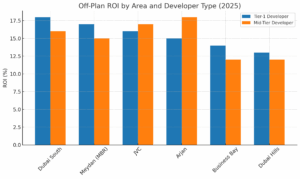
Best Off-plan ROI real estate in Dubai is quickly becoming the best way for investors to make a lot of money in 2025. Off-plan investments are a great way to get a high return on your money while minimizing the amount of money you have to pay up front. They offer affordable entry points, payment plans that are spread out over time, and a high chance that the property’s value will have increased by the time it’s delivered. In Dubai, where both residential and commercial projects are constantly growing, off-plan projects are being used by smart investors to make money and grow their portfolios.
Why Off-Plan Investments Matter in 2025
In 2025, there is a strong rise in off-plan transactions in Dubai’s ROI real estate market. Off-plan sales now make up more than 60% of all property deals, according to the Dubai Land Department (DLD). This trend shows that investors are confident, the government is backing the projects, and the pre-construction opportunities are making money.
Key Drivers of Best Off Plan ROI:
- Lower entry prices compared to ready properties
- Flexible payment plans stretching over 3–7 years
- High potential for capital appreciation before and after handover
- Investor-friendly laws and escrow account protection
- Demand from short-term rental markets and resale opportunities
Capital Appreciation: Profit Before Handover
Off-plan buyers are in a strong position to realize gains even before taking possession of the property. Due to rapid infrastructure growth and rising demand in areas like Dubai South, Meydan, and JVC, capital appreciation between booking and handover can be substantial.
Key Factors Contributing to Capital Appreciation:
- Upcoming infrastructure projects (e.g., Dubai Metro extensions, new malls, schools)
- Developer reputation and phased pricing
- Scarcity of inventory in prime or near-prime locations
- Anticipation of area-wide masterplan completion
Sample Appreciation Rates (2023–2025 Data):
- Dubai Hills Estate off-plan units: Appreciated 15–20% between launch and handover
- Emaar South townhouses: Rose by 12–18% in two years
- Meydan off-plan apartments: Increased 10–15% in pre-completion secondary resale value
Capital Gains Before Completion:
- Investors often flip off-plan properties in the secondary market, particularly after the 30–40% payment mark, resulting in double-digit profits without full payment.
Payment Plans: Best Off Plan ROI Through Cash Flow Efficiency
Unlike ready properties that require full payment or heavy financing, off-plan projects come with flexible, phased payment plans. These plans are designed to make ownership easier and free up cash flow for investors to diversify portfolios or reinvest early gains.
Common Payment Plan Structures:
- 60/40 or 70/30 Post-Handover Plans: Pay only 30–40% during construction, rest over 2–3 years post-handover
- 1% Monthly Installments: Especially popular among mid-market developers like Danube or Samana
- Milestone-Based Plans: Pay based on construction progress (e.g., 10% booking, 20% during structure, 30% on handover)
Best Off Plan ROI Advantage of Structured Plans:
- Reduced upfront capital = lower opportunity cost
- Resale before handover = capital gains with partial investment
- Post-handover rental income can cover remaining installments, enhancing yield
How to Maximize Best Off Plan ROI: Strategies That Work
To achieve the highest return from off-plan investment, investors need to look beyond pricing and adopt a strategic selection process that includes location, developer credibility, future demand, and resale liquidity.
1. Choose High-Growth Zones
Select communities where prices are still affordable, but future infrastructure or demand will drive appreciation. Centurion properties helps you navigate through the High-Growth Zones
Top 2025 Picks:
- Dubai South: Near Al Maktoum Airport and Expo City
- Meydan (MBR City): Central location, luxury positioning
- Arjan: Budget-friendly with upcoming schools and hospitals
- JVC/JVT: Established rental market, continued growth
2. Monitor Project Phases
- Phase 1 launches are priced lowest and offer best ROI
- Avoid investing in oversupplied zones unless tied to unique demand sources (e.g., tourism, education hubs)
3. Evaluate Resale Restrictions
Some developers place resale conditions (e.g., minimum 40% payment completed), so plan exit strategy in line with these terms.
Comparing ROI: Off-Plan vs Ready Property
| Aspect | Off-Plan | Ready Property |
| Entry Price | Lower (20–30% below market) | Market price or above |
| Capital Appreciation | High (pre- & post-handover) | Moderate |
| Rental Income | Post-handover only | Immediate |
| Cash Outflow | Staggered | Upfront or mortgage |
| Flexibility | High (resale, post-handover plans) | Limited by finance/mortgage terms |
| ROI (2025 avg.) | 10–20% annually (combined gains) | 5–8% (net rental + appreciation) |
Risks and How to Mitigate Them
While off-plan investments offer strong ROI potential, they come with certain risks:
1. Project Delays
- Mitigation: Invest with DLD-approved developers; verify escrow compliance
2. Over-Commitment
- Mitigation: Choose payment plans aligned with income/cash flow
3. Market Correction
- Mitigation: Avoid speculative flipping; invest in projects with real end-user demand
4. Limited Resale Liquidity
- Mitigation: Ensure property has strong location, views, and brand reputation
Winding Up
Off-plan investments in Dubai are no longer just a risky bet; they are now a well-regulated, developer-backed way for modern investors to get the best return on their money. Investors can get double-digit annualized returns with lower risk and better exit options if they pick the right project, enter at the right time, and use flexible payment structures.
- The partnership aims to deliver next-generation luxury residential and commercial projects, reinforcing Dubai’s status as a global real estate hub.
- Senior leadership from both companies gathered for the landmark signing ceremony.
- The new collaboration targets premium real estate projects spanning over 10 million square feet in built-up area and exceeding AED 10.5 billion in gross development value.
- The portfolio will comprise high-value residential and commercial development across popular communities including Business Bay, Meydan Horizon, Motor City, Dubai Islands, Dubai South, and Jumeirah Village Circle.
Dubai, July 05, 2025: Centurion Properties, one of Dubai’s premier real estate developers, has signed a Memorandum of Understanding (MoU) with CITIC Construction, a globally recognised engineering and construction giant and a wholly owned subsidiary of the CITIC Group, headquartered in China with an asset base of USD 1.7 trillion. This strategic agreement marks a significant milestone in promoting bilateral cooperation to deliver large-scale, premium real estate developments across the city, with constructions planned to commence from Q3 2025.
The signing ceremony featured a showcase dedicated to Centurion Properties’ evolutionary journey since its formation in 2013, highlighting major milestones and the successful launch of landmark projects, such as Capital One, Flora Isle, and Sola Residences, which have set new benchmarks for urban living and commercial excellence in Dubai. The MoU was signed between Joby George (CEO, Centurion Properties) and Li Sheng (General Manager of Middle East, CITIC Construction) in the presence of senior leadership from both companies.
Through this strategic partnership, Centurion Properties aims to develop over 10 million square feet of built-up area, with a gross development value of AED 10.5 billion. The impressive portfolio will comprise luxury residential developments and high-end commercial projects across highly sought-after communities, including Business Bay, Meydan Horizon, Motor City, Dubai Islands, Dubai South, and Jumeirah Village Circle (JVC)—all meticulously selected for their strong growth potential and long-term investment appeal.
Speaking at the signing, Mr. Joby George, CEO of Centurion Properties, stated, “Our collaboration with CITIC Construction signals a transformative step to bridge local expertise with global construction prowess. This partnership is set to drive innovation and elevate design standards, focusing on high-end living and modern infrastructure in Dubai. We are dedicated to crafting intricate designs that offer a truly luxurious experience, meeting the needs of today’s discerning customer and setting new benchmarks for quality in one of the world’s most dynamic markets.”
Mr Yang Jianqiang, Chairman of CITIC Construction, added, “As a proven and trusted global contractor, CITIC Construction sees immense opportunity in Dubai’s thriving real estate landscape. This alliance with Centurion Properties is a strategic step in expanding our footprint in a key global investment hub. We are confident that our combined strengths will produce exceptional value and landmark projects that endure over time.
This collaboration is rooted in a shared vision to not only build iconic structures but also to create vibrant, thriving communities. Centurion Properties is on a mission to transform urban landscapes by crafting sophisticated, modern spaces that are driven by intricate designs and continue to redefine high-end, luxurious living across the region. By pioneering innovation and delivering unparalleled quality, the partnership is poised to shape the future of luxury living in Dubai, ensuring that each development offers a unique and enduring legacy for generations to come.

About Centurion Properties
Established in 2013, Centurion Properties stands as a beacon of innovation in real estate development, transforming urban landscapes into vibrant spaces where people can live, work, and thrive. As industry pioneers at the forefront of innovation, Centurion crafts modern, sophisticated spaces that set new benchmarks for elegance and exclusivity. Renowned for their commitment to intricate design and high-end living, Centurion Properties transforms urban environments into vibrant communities where residents can truly flourish. With every project, the company delivers unique and luxurious experiences that meet the needs of today and anticipate the desires of tomorrow’s discerning clientele, setting the gold standard for luxury living in Dubai’s ever-evolving skyline.
About CITIC Construction
CITIC Construction Co., Ltd., a wholly owned subsidiary of CITIC Group, is a globally recognised EPC contractor ranked among ENR’s Top 250 International Contractors. With operations spanning over a dozen countries, including Algeria, Brazil, Kazakhstan, South Africa, and Russia, the company delivers end-to-end infrastructure solutions — from feasibility studies and financing to construction and operations — with a focus on sustainable industrial development. Backed by CITIC Group’s diversified sectors in finance, energy, and real estate, CITIC Construction offers integrated, value-added services that drive long-term impact. Certified with ISO 9001, ISO 14001, and OHSAS 18001 and holding Class-A+ general contracting and Class-A engineering design qualifications, the company is committed to pioneering innovation, excellence, and partnership on a global scale.